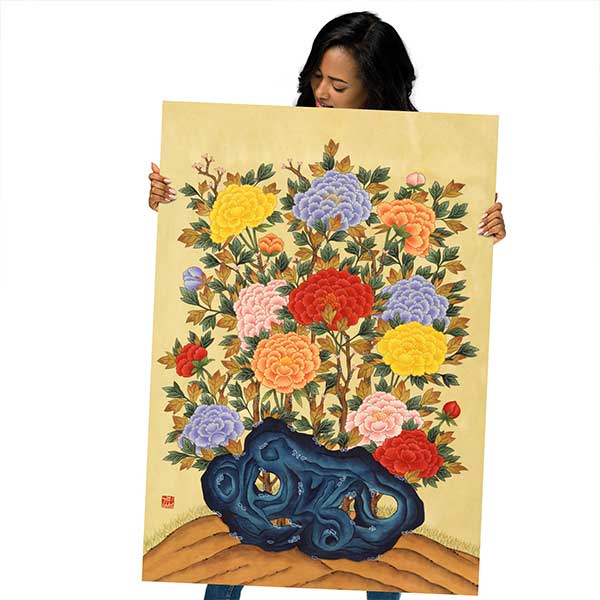
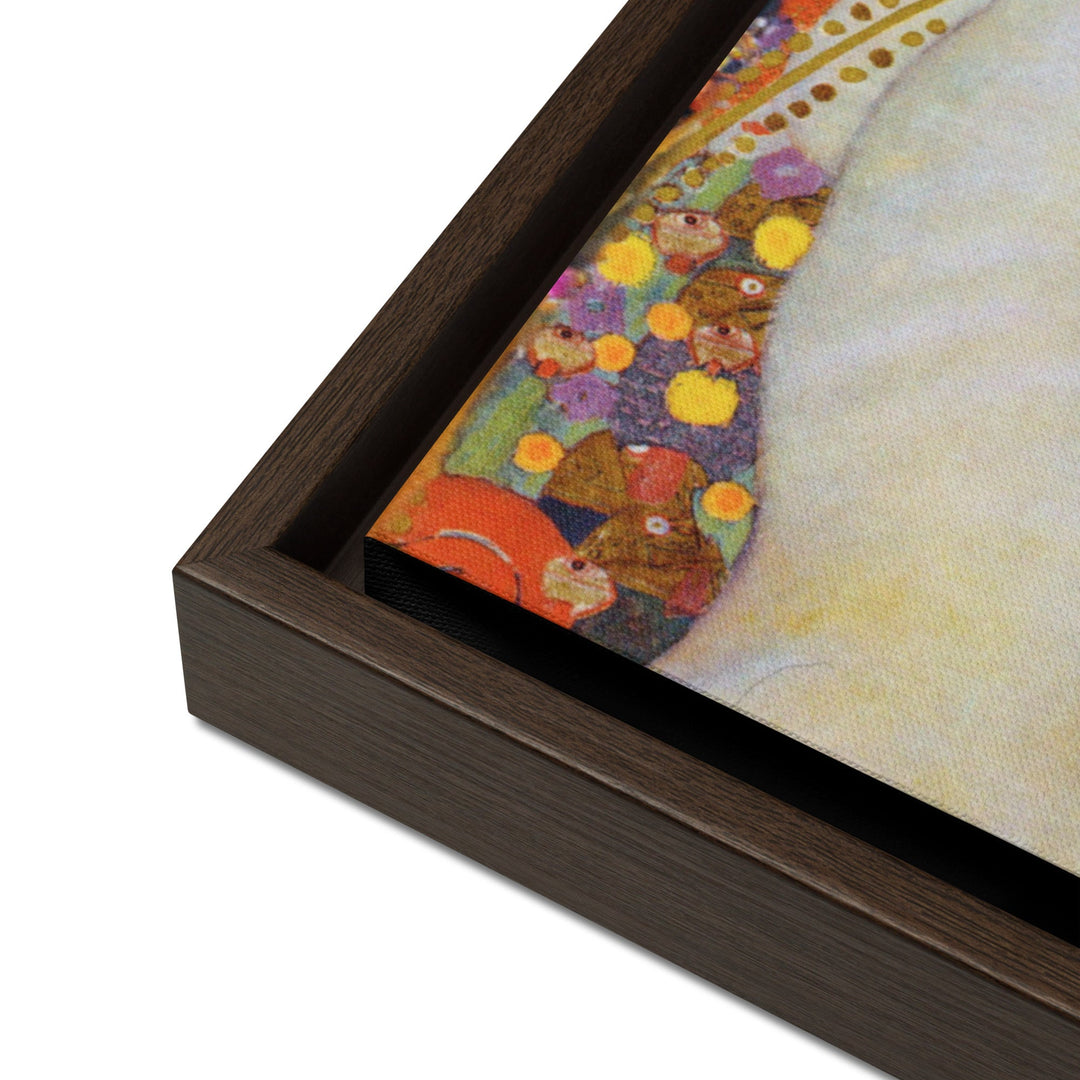
Poster with mat - Rocks in the Sea from Changdeokgung Palace
- In stock, ready to ship
- Delivery in 5–7 business days
- Free worldwide shipping* on orders of €60 or more
* For deliveries to countries outside Europe, the United Kingdom (UK), North America, Brazil, and Japan, additional import duties, customs duties, import VAT, or customs clearance fees may apply depending on the respective delivery and production locations. These costs are to be borne by the recipient.
ARTLIA's art prints are produced according to standardized paper and canvas formats.
Depending on the aspect ratio of the original artwork and the chosen format, it may happen that the edges of the image are slightly adjusted to achieve a harmonious overall effect and high print quality.
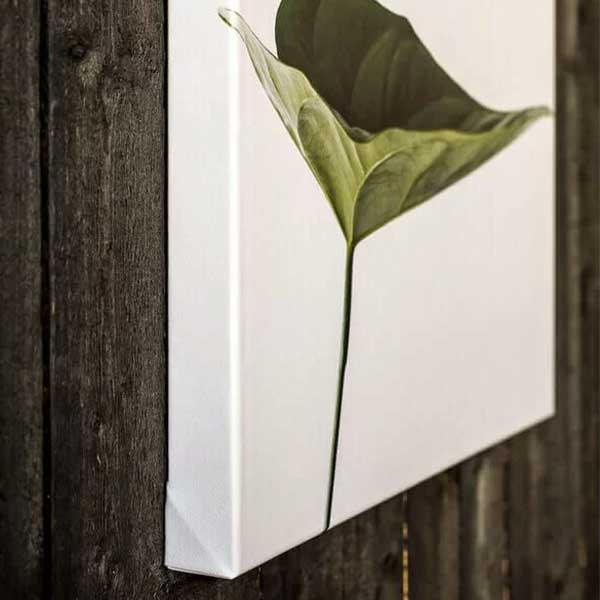
For canvas prints, the ARTLIA team ensures that the main motif is placed as fully as possible on the front side. The side frame areas are continued in color and style to match the original image.
This is a deliberate and common production step with which the ARTLIA team ensures the aesthetic quality of each artwork.
One motif, many styles: discover our diverse collection


Poster with Mat - Rocks in the Sea from Changdeokgung Palace
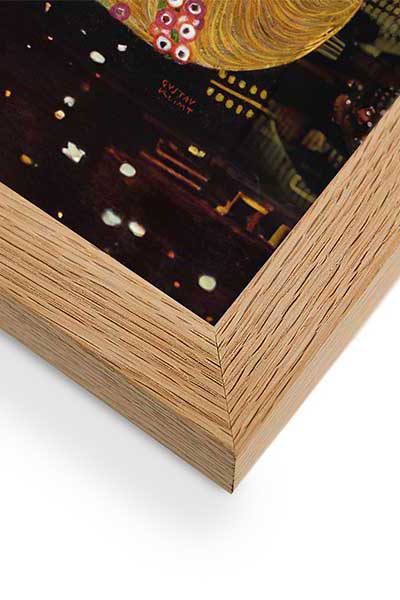
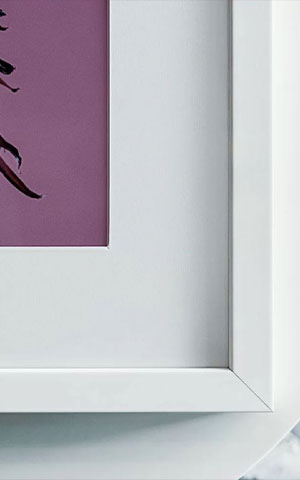
This poster with a smooth, white, matte cardboard mat gives any room a stylish look. The poster is printed on high-quality matte paper and framed with a semi-hardwood alder frame.
• Paper thickness: 0.26 mm
• Paper weight: 189 g/m²
• Alder, semi-hardwood frame
• Acrylic front protection
• White, matte mat
• Hanging hardware included
• 21 cm x 30 cm posters correspond to A4 size

Rocks in the Sea, Overall View of Chongseokjeong (총석정 절경도)
- Kim Gyu-jin | 1920 | Color on silk
- 195.5 × 882.5 cm | State-registered cultural heritage
This monumental wall painting once adorned the eastern wall of the Huijeongdang Hall in Changdeokgung Palace in Seoul. In its expansive panoramic format, it depicts the picturesque Chongseokjeong Pavilion and the impressive coastal landscape of Tongcheon in what is now the North Korean part of Gangwon Province. Chongseokjeong is one of the famous “Eight Landscapes of Gwandong,” one of Korea’s most traditional landscape motifs.
Particularly noteworthy is the painting’s unusual perspective. While traditional depictions of Chongseokjeong usually show the landscape from land, looking out toward the sea, Kim Gyu-jin takes the opposite viewpoint here: the viewer is on the sea, looking toward the coast. The calm expanse of water stretches across the quiet foreground, while behind it the bizarre, column-like rock formations of Chongseok extend across the entire width of the image like a monumental rocky curtain.
The unusual composition corresponds remarkably closely to the perspective of a photograph published in 1913 in the “Photo Album of Geumgangsan”. It can therefore be assumed that this photograph served as an important visual reference for Kim Gyu-jin (1868–1933). At the same time, the artist had extensive knowledge of the region and personal experience of the site. After receiving the commission to execute the wall paintings in June 1920, he traveled to the area again to study the landscape firsthand and record it in drawings. Surviving drafts and handwritten notes document this working process. To gain as comprehensive a view of the rock formations as possible, Kim Gyu-jin even took a boat out onto the open sea and made sketches from a greater distance.
In its artistic approach, the work departs from the established pictorial conventions of traditional court painting and aligns more closely with realistic landscape painting (실경산수화, Silgyeong Sansuhwa). The actual landscape is not merely suggested symbolically but rendered as vividly and precisely as possible in its characteristic appearance.

Stylistically, the painting also combines traditional Korean visual language with modern influences. The blue-green coloring of the background mountains, the schematically rendered waves, and the densely placed dots on the rocks recall the decorative aesthetic of traditional court painting. By contrast, fine lines, differentiated gray-brown and gray-blue tones, and pronounced light-and-dark contrasts give the rock formations greater solidity and spatial impact. This reflects the growing influence of Western painting techniques on modern Korean art.
The bizarre rocks of Chongseok form the visual center of the painting. Like a vast natural curtain, they extend across the entire picture surface and determine the monumental effect of the composition. The precise linework and finely graduated color contrasts make the various forms, surfaces, and structures of the individual rocks particularly vivid.
An important historical detail appears in the upper-left corner of the painting. Next to the title “Overall View of Chongseokjeong” (叢石亭絶景) are the ink inscription “Carefully painted by Kim Gyu-jin” (金圭鎭謹寫) and the artist’s personal seal.
The handwritten signature and personal seal also point to an important shift in Korean art history. While the individual artist in traditional court art often receded behind the function and commission of the work, personal identity and artistic authorship increasingly gained importance in modern Korean painting.